
Sources for Sacramento County Previous Residents
The strongest house history stacks sources by era and role. The table keeps an owner, a listed occupant, a household, and a building from being treated as the same evidence. It also shows where the online trail ends and where a counter, library, archive, or copy request begins.
| Source | Years It Covers | Where Held | What It Shows |
|---|---|---|---|
| Recorded-document index | 1849-present index | Clerk/Recorder online | Parties, type, date, document or book/page reference |
| Recorded deeds and images | Recorded documents from 1850 | Recorder offices or ordered copy | Vesting, grantors, legal description, signatures, prior references |
| Current Assessor roll | Current assessment cycle | Viewer, lobby, or request | APN, current owner offline, mailing and situs, values and exemptions |
| City and county directories | 19th and 20th century holdings; gaps to verify | Sacramento Room and State Library | Listed occupant, spouse, address, business line, edition year |
| 1950 and earlier census | Decennial schedules through 1950 | National Archives and library databases | Household members, relationships, age, occupation, census address |
| Sanborn maps | 1895; 1915 and revisions through 1952 | LOC, State Library, library database | Building footprint, use, materials, and structural context |
| Permit history | Digital and archival coverage varies | City or county custodian | Work dates, description, applicant, contractor, related records |
| Probate or obituary | Probate historical search 1948-2007; newspapers vary | Superior Court and library | Death, heirs, representatives, and address clues |
A date range is part of the source, not a footnote. If a volume, map, or file does not cover the address year, it cannot fill the gap by implication.
Start With the Current Sacramento Owner
Begin with the current parcel, not an old name. Search the Assessor Parcel Viewer by address or APN, click the mapped parcel, and save the situs, assessed value, land-use code, and map reference. The web viewer omits owner names. Use the Assessor lobby, phone or email channel, or a public-record request to obtain secured owner, mailing address, exemptions, and Recorder book or page.
The mailing address is a locate clue, not a promise of occupancy. It can belong to an agent, trust, PO box, or another property. Once the public owner field and Recorder reference are in hand, start the deed chain. The office's recorded-document, vital, marriage, and fictitious-business-name functions are separate from the occupant question.
This current parcel is the anchor for a previous residents search. Confirm the custodian at the County Clerk/Recorder homepage, then attach earlier names to the same land identity before treating them as part of the address history.
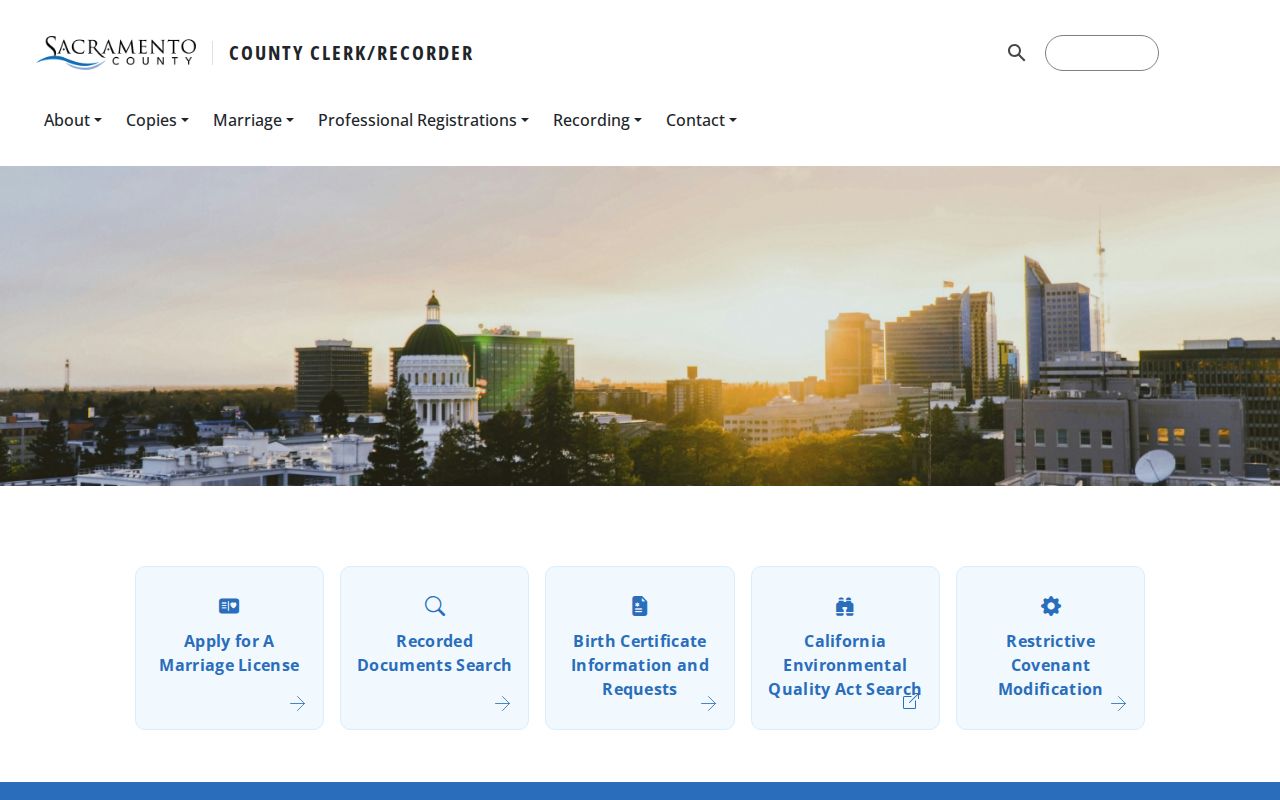
The Clerk/Recorder capture marks the custodian behind the land-record trail. The current record is the anchor for finding earlier parties, not the final answer about who occupied the house.
Seller-as-Grantee Mechanics in Sacramento
Use the current owner and Recorder reference in the Online Index of Recorded Documents. Read the deed image for the grantor, recording date, vesting, legal description, and prior-document references. Then search the seller as an earlier grantee, constrain by a plausible year, and compare the same lot, block, subdivision, legal description, or APN lineage.
- Copy the current parcel and owner spelling exactly, including trust or entity forms.
- Search the index for a deed, deed of trust, reconveyance, assignment, lien, or related filing.
- Order or inspect the instrument so the legal description can be read, not guessed from the index label.
- Move the grantor into the earlier-grantee search and compare the parcel across the next transfer.
- Stop at a split or uncertain description and use a plat, map, or staff copy request before continuing.
The index is free, but it is not the image system. Copies are a separate access step.
Each earlier grantor becomes a candidate in a previous residents chain only after the deed image and legal description agree.
The 1849 Sacramento Index Still Needs an Image
Sacramento's recorder index begins in 1849, which reaches through the county's 1850 statehood transition. That depth is valuable for previous residents because it avoids a modern digital cutoff for index metadata. It does not mean every deed image is online. The Clerk/Recorder describes records as available from 1850 through office viewing or copy channels.
Current official-record copy pricing is $8 for the first page plus $1 per added page for a noncertified copy, and $9 for the first page plus $1 per added page for a certified copy. Self-service uncertified counter copies cost $1 per page. A no-record certificate can use the same search fee. The Clerk/Recorder fee schedule should be checked before ordering.
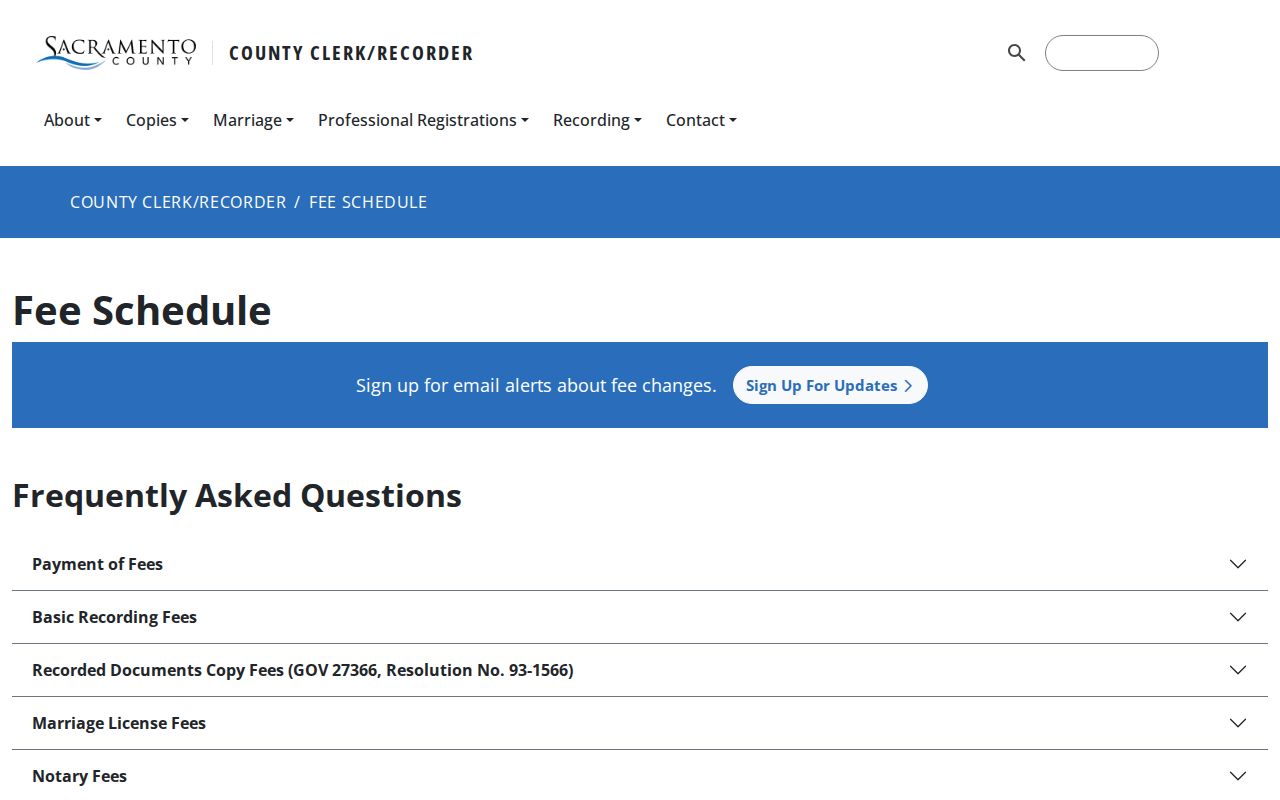
The fee capture separates the free index from paid copy work. Keep the document number or book and page before leaving the search.
Bridge Sacramento Addresses With Legal Descriptions
Old addresses are not always stable. Sacramento's central grid uses numbered north-south streets and lettered east-west streets, while later annexed and suburban areas use named and curving streets. A Sacramento postal city can also cover unincorporated county territory. When a directory address disappears, use the legal description, lot and block, tract map, parcel split, and APN lineage to test whether the same land is still being followed.
The Assessor map is an assessment aid, not a legal survey. A Sanborn sheet can show a changed building footprint. A permit can date work. Neither replaces the deed description. The address chain becomes sound when the same land identity appears in the deed, map, directory, and current parcel record.
- Grantor
- The party transferring an interest in the recorded instrument.
- Grantee
- The party receiving the interest named in that instrument.
- Chain of title
- A sequence of transfers used to trace an interest backward through earlier documents.
- Legal description
- The deed's land identity, which can outlast a changed street label.
Use the county's recorded-document copy instructions when the index reference needs an image.
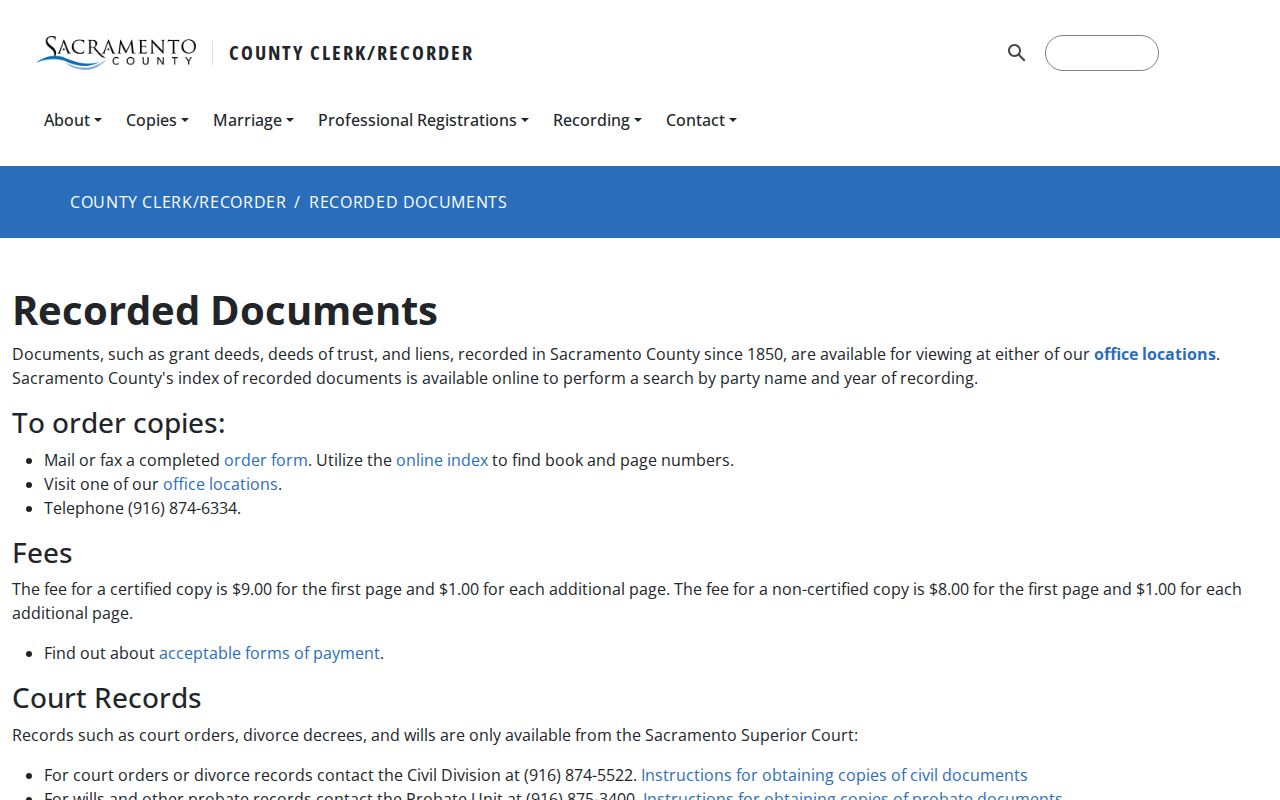
The copy-request capture reinforces the need to move from an index entry to the underlying instrument when an address has changed.
Criss-Cross Directories Find Past Occupants
A deed chain follows ownership. A reverse directory can identify a past listed occupant who never held title. In a Sacramento Room edition, start with the street section, locate the number, and transcribe the name, phone, and edition year. Then check the alphabetical entry, spouse notation, occupation or business line, and the volume's abbreviation key. “r” can mean residence, “h” house, and “bds” boards in many runs, but the edition key controls.
Telephone directories are subscriber evidence, not a census of adults. Missing names may reflect a move, death, nonlisting, a publication gap, or a changed address. The Sacramento County city directory archive holds the collection and reading method, while this previous-residents workflow uses only the dated address clue.
Sanborn Maps Explain the Sacramento Structure
The 1895 Sacramento Sanborn atlas contains 44 sheets and 85 digitized images. Later authoritative references identify 1915 mapping and revisions through 1952. The maps can show footprint, construction, materials, and use, which helps explain a demolished building, changed lot, or old address. They do not name occupants.
Coverage reaches beyond Sacramento city. Galt, Folsom, Elk Grove, Isleton, Courtland, and Walnut Grove appear in the broader map search. For a Delta address, river and island geography can matter more than a straight-line distance. Pair the map with a directory entry, deed description, and parcel map.
When a house history leaves the ordinary index, the Center for Sacramento History, California State Archives, FamilySearch catalog, California State Railroad Museum archives, diocesan or church collections, cemetery registers, and local newspaper files can supply a different dated clue. Access may require staff help or permission. The source should be named, dated, and kept separate from an assumption about the person who occupied the building.
Pair Sacramento Directories With Census Years
The 1950 federal population schedule is the newest public decennial census under the 72-year rule. It can add household members, relationships, age, occupation, and a census address to a previous-residents trail. Use it as a dated snapshot, not as proof that the household stayed at the address before or after enumeration.
- Choose a directory edition near the census year and copy the exact address and name.
- Find the matching census enumeration address and compare names, relationships, and age.
- Check a directory edition before and after the census for a move or household change.
- Use an obituary, cemetery record, probate filing, or deed to test a disappearance.
- Save the census page, directory citation, and parcel identifier as one evidence set.
Open the National Archives 1950 census resource before pairing a directory entry with a household schedule.
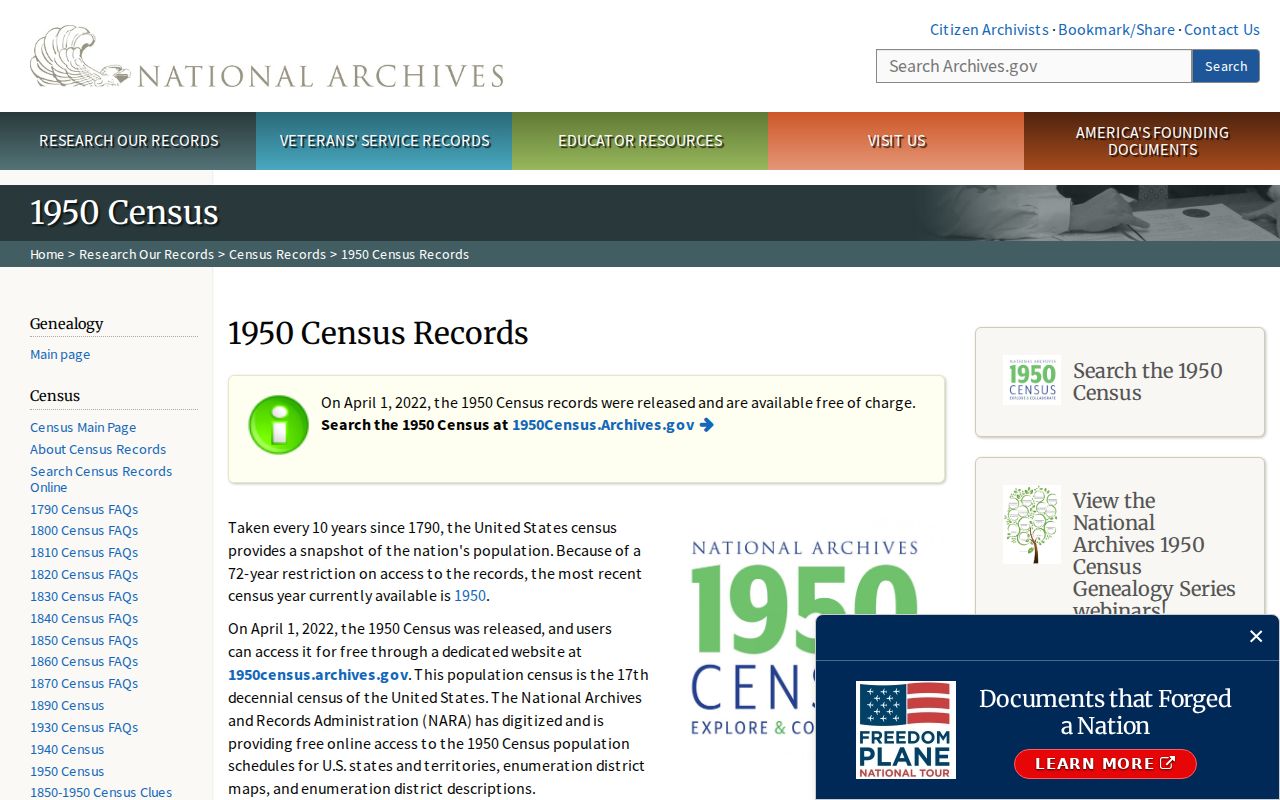
The National Archives capture marks the census channel that can fill a gap between directory editions. Household evidence still needs address and identity checks.
Probate and Obituaries Close a Past Trail
When a name disappears, probate and obituary material can explain why. Sacramento Superior Court's historical probate search covers 1948 through 2007. Public probate filings may name an estate representative, heirs, and addresses, while restricted documents remain unavailable. Newspapers, cemetery records, and funeral-home archives can add a death date or family grouping.
Verify an obituary against a death certificate, probate filing, or deed. Monuments and notices can contain errors. A former occupant may have died, moved, changed a surname, or simply stopped appearing in the directory. Treat each explanation as a hypothesis until another dated source supports it.
That is how a previous residents question closes: with a dated record and a clear source role, not with a name that merely looks familiar.
Lawful House History Has Clear Limits
Previous residents research is appropriate for genealogy, architecture, estate work, and local history. It should not be turned into a claim about a current household without a current custodian record. Ownership, a listed occupant, a census household, and a mailing address are different facts.
Use the trail with care. Sacramento County records may be used for personal, lawful house history. Do not use a name, address, deed, or directory entry to stalk, harass, intimidate, threaten, or harm anyone.
Keep source dates and identifiers. If a record is wrong, ask the Assessor, Recorder, court, library, or other custodian that holds it. For the current parcel-to-owner chain, use the Sacramento County street directory. A corrected source is stronger than a corrected summary.